
What §70505 ended for the 25C home energy credit
OBBBA did not replace the 25C home energy credit. It ended it. Section 70505 of the One Big Beautiful Bill Act terminates the energy-efficient home improvement credit for property placed in service after December 31, 2025, so the right question for homeowners is not which new federal credit took its place, but whether a 2025 project still qualifies and what planning remains for 2026.
That distinction matters because many taxpayers are still preparing or amending 2025 returns while also planning 2026 home projects. A homeowner who bought qualifying windows, insulation, doors, a heat pump, an electrical panel, or certain energy-efficient equipment before year-end may still need documentation for IRS Form 5695. A homeowner starting the same project in 2026 should not expect a Section 25C federal credit unless Congress changes the law again.
The practical takeaway is simple. OBBBA did not create a successor credit for ordinary home energy improvements. It accelerated the end of the Section 25C credit, making the placed-in-service date the key fact. Homeowners now need to separate three decisions: whether a 2025 credit is still available; whether 2026 state or utility incentives can reduce project cost; and whether other tax strategies can offset cash flow after the federal credit disappears.
This article explains how the energy-efficient home improvement credit ended, how the placed-in-service rule works, what homeowners should check before filing or amending a 2025 return, and how to plan 2026 projects without overstating an expired credit.
How OBBBA ended the energy-efficient home improvement credit
Section 70505 is short, but the effect is direct. It amends Internal Revenue Code Section 25C(h) by striking the prior termination language and inserting a new rule for property placed in service after December 31, 2025. The energy-efficient home improvement credit is not available for eligible property placed in service in 2026 or later.
Before OBBBA, Section 25C was scheduled to run through 2032. The credit generally helped homeowners claim a portion of the cost of qualifying energy-efficiency improvements, subject to annual caps, product limits, and documentation requirements. The credit commonly appeared on 2025 planning checklists for insulation, exterior windows, exterior doors, heat pumps, heat pump water heaters, biomass stoves, central air conditioners, electrical panels, home energy audits, and similar improvements.
OBBBA terminates the credit going forward by moving the end date to property placed in service after December 31, 2025. That makes timing the central issue for taxpayers still filing 2025 returns. IRS Publication 17 and IRS Publication 530 remain useful background references for individual taxpayers and homeowners reviewing the 2025 return.
Section 70505(b) also makes a conforming amendment to Section 25C(d)(2)(C) for oil furnaces and hot water boilers, retaining a manufacturer rating requirement that the unit be usable with fuel blends containing at least 20 percent eligible fuel. The amendment does not create a new 2026 credit. The substantive 25C credit still ends for property placed in service after December 31, 2025.
Why does the placed-in-service date control the 25C credit
The phrase placed in service is the dividing line. For tax purposes, a home improvement is generally placed in service when it is ready and available for its intended use, not merely when a homeowner signs a contract, pays a deposit, or orders equipment.
Consider a homeowner who paid a contractor in November 2025 for new qualifying windows, but installation was not finished until January 2026. The payment date alone may not be enough. If the windows were not installed and ready for use until 2026, the homeowner may miss the federal Section 25C window under OBBBA.
Compare a homeowner who completed a qualifying heat pump installation on December 20, 2025, received the manufacturer certification statement, and kept the invoice. That taxpayer may still claim the 2025 credit on Form 5695 if all other requirements are met. The difference is when the property was placed in service, not the purchase intent.
Taxpayers should be careful with projects that cross year-end. Contractor delays, permit inspections, backordered equipment, and final activation dates can all affect the support file. If the credit is material, the taxpayer should keep records showing installation date, service date, property address, product specifications, contractor invoice, and proof of payment.
How to use Form 5695 for 2025 25C credit claims
Homeowners with 2025 projects should not assume the credit is gone for everything. Section 70505 ends the credit for property placed in service after December 31, 2025, but it does not erase the credit for qualifying property placed in service on or before that date.
For the 2025 return review, use a simple sequence:
- Gather every invoice for 2025 energy projects
- Confirm what was installed, where, and when it was placed in service
- Match the item to the Section 25C category on IRS Form 5695
- Keep manufacturer certifications or product documentation when available
- Review the annual limits before assuming the full project cost will qualify
For example, a married homeowner completed qualifying insulation and exterior door improvements in 2025, and the combined eligible cost produced a $1,200 credit under the Section 25C limits. If their 2025 federal tax liability before credits was $7,500, the credit could reduce the tax bill to $6,300. If the same work is placed in service in February 2026, OBBBA generally removes that federal Section 25C credit from the calculation.
Taxpayers who filed quickly, forgot Form 5695, or did not give their preparer the energy documentation may need to review whether an amended return is appropriate. The answer depends on the dollar amount, the records, and whether the improvement qualifies.
What replaced the 25C credit for 2026 home energy planning
For 2026 projects, nothing directly replaced the 25C credit. The planning conversation changes from federal credit capture to after-tax cost management. Homeowners can still pursue efficiency upgrades because they reduce utility costs, improve comfort, or support property value. Still, the federal Section 25C credit should generally not be included in the payback calculation.
A simple model helps. Suppose a homeowner plans a $10,000 efficiency project in 2026 that would have generated a $1,200 credit under prior expectations. Without the federal credit, the project needs to rely on energy savings, state incentives, utility rebates, financing terms, and non-tax benefits. If the upgrade saves $600 per year in utility costs, the simple payback changes from roughly 14.7 years with a $1,200 credit to 16.7 years without it.
That does not mean the project is bad. The tax assumption changed. Homeowners should update contractor quotes, ask utilities about rebates, and confirm whether state programs still exist before making a decision. A local rebate may still reduce the upfront cost even though Section 25C is no longer available after 2025. IRS Publication 505 provides general guidance on withholding and estimated tax that may matter if a homeowner relied on the prior credit assumption in 2026 cash flow planning.
Before signing a 2026 contract, homeowners should ask three questions:
- Is the incentive federal, state, utility-based, or simply an estimated energy savings claim?
- Does the quote still mention a federal 25C credit after the OBBBA termination date?
- Does the project make sense without the expired federal credit in the payback model?
How the 25C credit interacts with the Home office deduction
Section 25C is a personal residential credit, so this article should be treated as an Individual topic. The Home office connection is narrower. It matters only when the homeowner also has a qualifying business-use space and needs to separate personal credit rules from business expense rules.
A self-employed taxpayer with a qualifying exclusive-use workspace may evaluate Home office treatment for ordinary and necessary business expenses tied to that space. That is a separate analysis from Section 25C. The taxpayer should not relabel a personal home energy project as a business deduction unless the expense is properly allocable and connected to business use.
Here is a cleaner example. A consultant uses 15 percent of a home exclusively and regularly as a principal place of business. In 2025, the consultant installs a qualifying heat pump before December 31, 2025, and properly claims the personal Section 25C credit on Form 5695. Going forward, the same taxpayer may still track allowable home expenses through the Home office calculation on the business-use percentage, but that calculation does not revive Section 25C for property placed in service in 2026.
Homeowners with business use need clean categories. Section 25C was a personal credit for a qualifying property acquired in 2025. Home office is a separate business-use calculation. Utility rebates and state incentives have their own rules. Capital improvements may affect basis, but that is not the same as a current federal credit.
What 25C credit documentation should taxpayers keep
Documentation is now the highest-value part of the 25C conversation. If the project was placed in service by December 31, 2025, records support the credit. If the project moved into 2026, records help avoid claiming a credit that no longer applies.
Keep a file with the signed contract and change orders, invoices showing labor and materials with model numbers and installation address, proof of payment, manufacturer certification statements or product efficiency documentation, final inspection or completion records showing the date of placement in service, and photos or contractor completion reports when the timing is disputed.
The records should connect the improvement to the tax year. A quote dated 2025 does not prove the property was placed in service in 2025. A deposit dated 2025 does not prove the project was complete. The most useful file shows the item, the property, the date it became usable, and the amount eligible for the credit.
Common 25C credit mistakes after OBBBA
The first mistake is saying OBBBA replaced the 25C credit. It did not. Section 70505 ended the credit for property placed in service after December 31, 2025. If an article, quote, or sales pitch describes a new 25C replacement, ask for the Code section.
The second mistake is treating a 2025 deposit as proof that the property was placed in service in 2025. Payment timing and placed-in-service timing are not the same.
The third mistake is ignoring the differences among Section 25C (the residential clean energy credit under Section 25D), clean vehicle credits, state rebates, and utility incentives. Each has its own rules and its own OBBBA outcome.
The fourth mistake is planning 2026 withholding or estimated tax payments around a federal credit that has ended.
The fifth mistake is forgetting that IRS Publications 17, 530, and 505 explain broader homeowner concepts but do not extend a credit that the statute ended.
How to plan home energy costs after the 25C credit ends
Homeowners can still make smart tax and cash-flow decisions after Section 25C ends. The planning just moves away from a direct federal home energy credit and toward a broader 2026 tax plan.
Start with the return. If a 2025 project qualifies, claim it correctly. If a 2025 project was missed, evaluate whether the refund is sufficient to justify filing an amended return. If the project is in 2026, remove the 25C credit before deciding whether the work still makes financial sense.
Next, look at other tax levers that actually apply. A homeowner with investments may use Tax loss harvesting to offset capital gains. A taxpayer with eligible medical coverage may model Health savings account contributions. Employees and self-employed taxpayers with retirement access may compare Traditional 401k and Roth 401k contributions for the year.
Finally, coordinate with the calendar. A project that barely missed December 31, 2025, may not be fixable for 25C purposes, but the taxpayer can still update 2026 withholding, quarterly estimates, and cash reserves. The goal is not to force a credit where the statute ended it. The goal is to replace an outdated assumption with a defensible plan.
How Instead supports 2026 tax planning after Section 25C
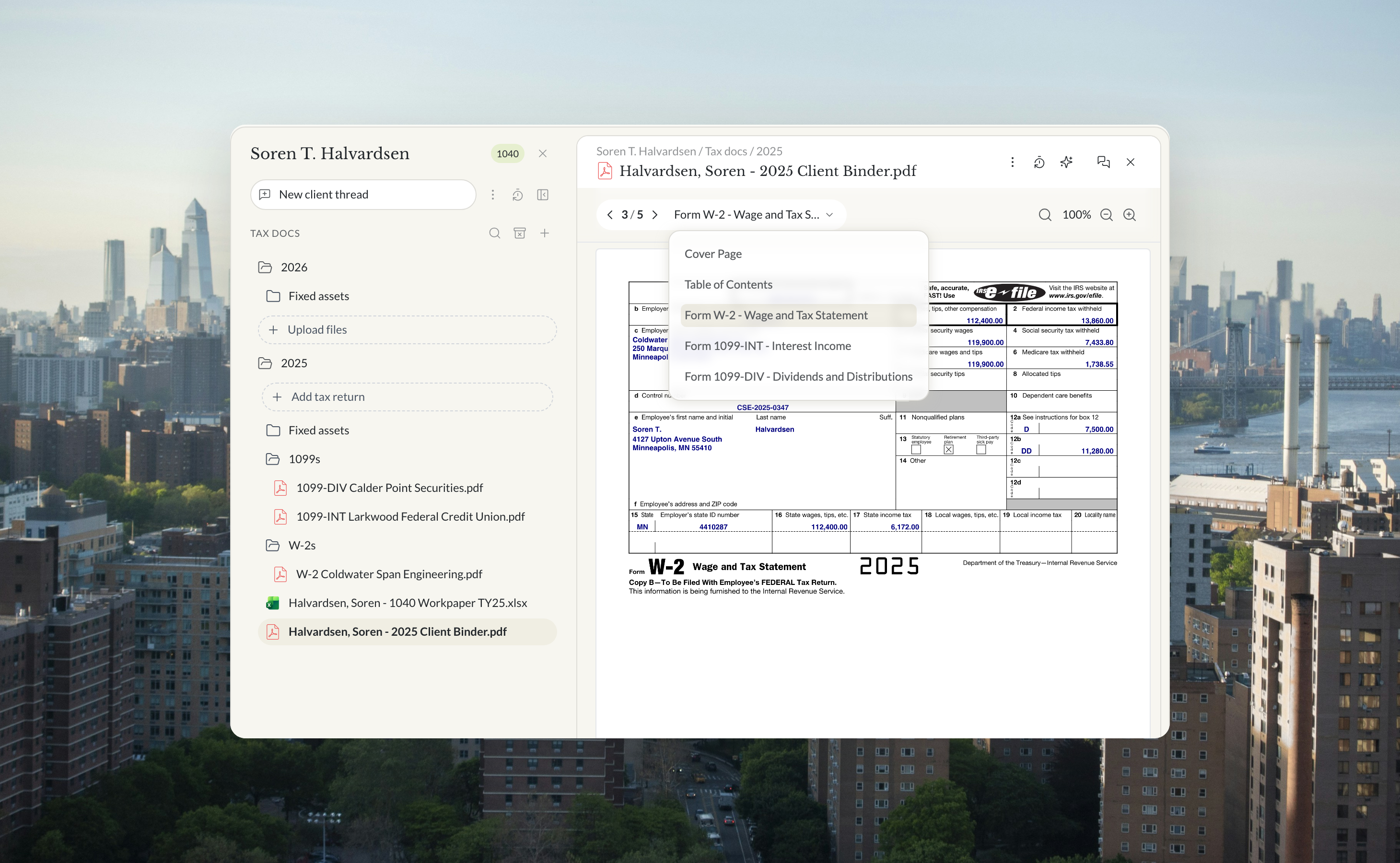
Section 70505 changes the federal math for home energy improvements. It also provides a timely reason to review the return, project records, and broader tax plan before the next filing season. Visit Instead's comprehensive tax platform to organize strategy documents and align planning with current law rather than outdated assumptions. Instead's intelligent system helps individual taxpayers and advisors coordinate tax research on Section 25C facts, maintain tax workpapers on placed-in-service dates and invoices, run tax returns review on 2025 credit positions, model tax estimates for the year ahead, and organize tax documents for clean Form 5695 support. Review pricing plans to find the support tier that matches your 2026 planning needs.
Frequently asked questions
Q: Did OBBBA replace the 25C home energy credit with a new federal credit?
A: No. OBBBA did not replace the 25C home energy credit. Section 70505 ended the credit for property placed in service after December 31, 2025, and there is no successor federal credit for ordinary home energy improvements in the legislation. State rebates, utility incentives, and unrelated tax credits may exist, but they are separate from Section 25C.
Q: Can I still claim the 25C credit on my 2025 return after OBBBA?
A: Possibly. If the qualifying property was placed in service on or before December 31, 2025, you may still be able to claim the credit on IRS Form 5695, subject to the usual limits, manufacturer certification rules, and documentation requirements that existed before the OBBBA termination took effect.
Q: Does the oil furnace and hot water boiler fuel-blend rule still matter?
A: It can matter for a 2025 claim. Section 70505(b) kept technical language for certain oil furnaces and hot water boilers rated for fuel blends with at least 20 percent eligible fuel, but it did not create a new 2026 credit. Homeowners with 2025 installations should confirm the equipment meets the existing Section 25C requirements.
Q: Does paying a contractor in 2025 preserve the 25C credit?
A: Not by itself. The placed-in-service date matters more than the deposit or payment date. Keep completion records, invoices, manufacturer certifications, and product documentation so the file shows when the property was installed and ready for use, not just when it was ordered or paid for.
Q: Can I deduct 2026 home energy improvements another way?
A: Personal home improvements are usually not deductible simply because the 25C credit ended. Business use, rental use, medical modifications, state incentives, or utility rebates may have separate rules. Still, they do not automatically replace Section 25C as a federal credit for ordinary home energy work.
Q: How should I budget for 2026 home efficiency projects without the credit?
A: Remove the federal 25C credit from the payback model, then compare utility savings, state rebates, local incentives, financing costs, and any separate tax strategies that genuinely apply to your facts. Use the project's own economics, not an expired credit, to decide whether the upgrade still makes sense.


The Destruction of the Billable Hour: AI's Impact on Accounting Firm Pricing in 2027

Year-End Tax Planning 2026: Checklist of Strategies by Dec 31


.png)