
Travel expense rules for summer 2026 business trips

Summer business travel creates a simple planning opportunity and a common compliance trap. Owners book conferences, client visits, site inspections, leadership retreats, and sales trips while calendars are lighter. The deduction can be valuable, but Travel expenses are not deductible just because a trip feels useful or happens during business hours. The file must show that the taxpayer was traveling away from a tax home for a bona fide business purpose and that the costs were ordinary, necessary, and documented.
IRS Publication 463 is the primary source for this analysis. It defines deductible travel expenses as ordinary and necessary expenses incurred while traveling away from home for business, profession, or job. Ordinary means common and accepted in the trade or business. Necessary means helpful and appropriate, not absolutely required. That distinction matters in 2026 because summer trips often mix client work, owner vacation time, spouse travel, children, and destination conferences.
Advisors should treat summer travel as a mid-year workflow, not a receipt cleanup project in January. Before the client leaves, confirm the business purpose, destination, expected dates, traveler list, reimbursement method, and recordkeeping plan. After the trip, reconcile the actual costs, separate personal days, apply meal limits, and update estimates if the deduction moves taxable income. The best travel deduction is unremarkable, because the facts line up before the ticket is booked.
What counts as business travel away from home in 2026?
The first question is whether the taxpayer is away from home for tax purposes. Publication 463 generally treats a tax home as the regular place of business or post of duty, including the entire city or general area where the business or work is located. A family home is not always the tax home. If the client lives in one city but works mainly in another, the work location may control the travel analysis.
That rule is especially important for owners with remote teams, seasonal offices, or multiple locations. A shareholder who lives near the beach for the summer may still have a tax home where the business activity is centered. A consultant who spends most of their working time in one market may not deduct lodging there just because their family residence is elsewhere. For Individuals, the tax home should be determined before the client starts labeling flights as business travel.
Publication 463 also warns that itinerant taxpayers cannot deduct travel expenses because they are not considered to be traveling away from home. If the person has no regular business location, no main place of business, and no place where they regularly live, the tax home follows the work. That can surprise mobile contractors, traveling salespeople, and owners who believe every hotel stay is deductible because they are always on the road.
A temporary assignment can create deductible travel, but the expected length matters. Publication 463 treats an assignment in one location as indefinite if it is realistically expected to last more than one year, or actually lasts more than one year. Costs tied to an indefinite assignment are not travel away from home. Summer engagements are usually shorter, but advisors should document the expected end date when the client accepts the project.
Which summer trip costs are deductible in 2026?
Deductible travel costs can include transportation between the tax home and business destination, baggage charges, lodging, business calls, tips, and other ordinary and necessary costs related to the trip. Local transportation at the destination can also qualify if it connects to the airport, hotel, work location, client site, or a business meal. The deduction follows the business reason for the cost, not the taxpayer's being out of town.
Common deductible summer travel costs include:
- Airfare, train fare, bus fare, rideshare, rental car charges, tolls, parking, and baggage fees are tied to the business destination.
- Hotel or short-term lodging for business nights when the taxpayer is away from the tax home and needs sleep or rest.
- Business calls, internet access, shipping, tips, and similar costs incurred during the trip.
- Client-site transportation and other destination travel between lodging, meetings, conference venues, and meals.
- Conference or convention costs when the event is directly related to the taxpayer's trade or business.
Transportation costs should be coordinated with Vehicle expenses when the client drives rather than flies or uses a personal vehicle at the destination. The car file should not be an afterthought. Mileage logs, actual expense records, parking, tolls, and business routes require the same level of discipline as the hotel bill. If the trip includes personal sightseeing, the mileage log should separate business routes from personal driving.
Lodging is based on actual cost. Publication 463 allows a standard meal allowance in many cases, but it does not provide a comparable optional standard lodging amount. That means hotel invoices and dates matter. If the client extends a trip for a family weekend, the additional personal lodging nights should be carved out before the deduction is booked.
How do meals deductions work during summer business travel?
Meals are usually where travel files get loose. Publication 463 says meal costs can be deductible when the taxpayer must stop for substantial sleep or rest while traveling away from home on business. The expense cannot be lavish under the facts and circumstances. That does not mean every meal must be cheap. It means the amount should make sense for the trip, client, location, and business purpose.
For most taxpayers, business travel meals remain subject to the 50% limit. Advisors should coordinate travel meals with broader Meals deductions planning so the firm does not apply the wrong percentage or treat entertainment as food. A dinner with a client can be a meal expense only if the business purpose, participants, date, place, and amount are documented. Entertainment costs are a separate problem and should not be buried inside a restaurant receipt.
The client can use actual meal costs or, when allowed, the standard meal allowance for meals and incidental expenses. The standard allowance reduces the need to chase receipts for meals, but it does not eliminate the need for records. Publication 463 still requires proof of time, place, and business purpose. Advisors should not tell clients that a per diem method means no documentation.
Partial travel days need proration. Departure and return days usually do not receive the same full-day treatment as a complete business day away from home. If the client travels Monday afternoon, attends meetings Tuesday and Wednesday, and returns Thursday morning, the file should show which days used a full allowance and which days were prorated. That detail prevents the estimate from overstating the deduction.
How to separate business days from personal travel
Summer trips often combine a business meeting with family travel. That can still produce a deduction, but only the business portion should be claimed. Publication 463 allows the taxpayer to deduct the business traveler's fare when the trip is primarily for business within the United States. Still, personal costs for a spouse, dependent, or friend usually are not deductible unless that person is an employee with a bona fide business purpose for being there.
Advisors can use this review sequence:
- Identify the tax home and the business destination before looking at receipts.
- List each travel day and mark it as business, personal, mixed, departure, or return.
- Separate the business traveler's transportation from family or companion transportation.
- Allocate lodging, rental car, meals, and activity costs between business and personal use.
- Document the business purpose, attendees, locations, and outcome while the facts are fresh.
Companion travel deserves direct language. If a spouse occasionally types notes, attends dinners, or joins informal conversations, that usually does not create a bona fide business purpose. Publication 463 gives similar examples and limits the deduction to the business traveler's cost. If a single hotel room costs more because a spouse came along, only the single-occupancy business cost should be deducted.
Owners also need to watch local lodging near a second home or vacation property. A client cannot make a personal summer location deductible by checking email at breakfast. If the owner is working from a vacation home, consider whether Home office rules are more relevant than travel rules. Even then, exclusive and regular business use remains a separate test.
Family travel creates one more summer issue. If children come along, their airfare, lodging, meals, and entertainment are usually paid for by the parents. If a child actually works at the destination, that fact pattern belongs in Hiring kids planning, not in a loose travel allocation. The business should show real services, reasonable pay, supervision, and payroll records before treating any child-related cost as connected to the trip.
What records should clients keep for a business trip?
Travel deductions fail when the advisor receives a credit card export with no story. Publication 463 emphasizes the need for records that establish the amount, time, place, and business purpose. For meals and entertainment-related records, the file also needs the business relationship of the people involved. The documentation does not have to be fancy, but it should be contemporaneous enough to be credible.
Pre-trip planning should capture the meeting agenda, invitation, conference program, client emails, project scope, expected dates, and traveler list. During the trip, the client should save hotel bills, transportation receipts, meal notes, and calendar entries. After the trip, the advisor should reconcile the costs and decide what is deductible, partially deductible, nondeductible, reimbursed, or capitalized. A short review memo is useful because it preserves the allocation logic before memories fade, especially when the trip included weekend days, family members, upgraded rooms, or a mix of client meetings and owner planning time.
Entity structure affects who owns the deduction and how reimbursement should work. Partnerships should follow the partnership agreement and reimbursement policy rather than letting partners claim informal, unreimbursed costs. S Corporations need clean, accountable-plan reimbursement practices because shareholder-employees are employees for wage and reimbursement purposes. C Corporations should keep board, officer, and employee travel policies consistent enough that executive travel does not appear to be disguised personal consumption.
Large equipment or technology bought for a trip may not be a travel expense at all. A laptop, camera, trade show display, or vehicle accessory may belong in Depreciation and amortization analysis rather than the travel category. The travel folder should flag these items so the preparer can decide whether expensing, depreciation, listed property, or capitalization rules apply.
How accountable plans protect travel reimbursements
For employers, the reimbursement method can be as important as the expense itself. Under an accountable plan, employees must have a business connection for the expense, substantiate it within a reasonable period, and return excess advances within a reasonable period. When those requirements are met, reimbursements generally are not treated as taxable wages. When they are not met, the payment can become wage compensation.
A summer travel policy should be practical enough for employees to follow. Require a trip purpose, approval threshold, receipt rules, meal method, mileage method, companion policy, and deadline for substantiation. The policy should also explain whether advances are allowed and how unused advances are returned. If the employer pays a flat amount with no substantiation, the payroll team may be dealing with a nonaccountable plan.
Advisors should also keep travel reimbursements separate from fringe benefit planning. A health reimbursement arrangement is not a tool for ordinary travel costs, and medical reimbursements should not be used to clean up business trip receipts. Similarly, employee recognition during a summer meeting should be reviewed under employee achievement awards rules rather than folded into travel.
Setting summer travel estimates and follow-up
Summer travel can move quarterly estimated taxes if the deduction is large or the reimbursement is unusual. Advisors should update the projection after the trip closes, not at year-end, so the client knows whether a September or January estimate needs adjustment. Owners with seasonal income, multi-state work, or installment compensation may see larger swings than typical W-2 clients, and the projection should reflect that volatility before the next estimated payment is due.
Follow-up review should also include a short post-trip note in the file. The note can capture which costs were reimbursed under the accountable plan, which were treated as personal, which need depreciation review, and which were flagged for further documentation. A brief written record protects the deduction if the return is later examined and gives the next preparer a clear handoff. The Q3 review meeting is a natural time to confirm that summer travel is fully posted, reimbursed, and reflected in the year-end tax projection.
Planning for conferences, retreats, and training
Conferences and conventions can be deductible when there is a direct relationship to the trade or business. The agenda should support that conclusion. A four-day resort trip with one light networking breakfast is not the same as a technical conference with sessions, client meetings, and continuing education. The file should keep the program, session list, registration invoice, and notes about why the event mattered to the business.
Summer retreats need even more discipline because the facts often include meals, lodging, entertainment, awards, and family members. The advisor should separate strategic planning sessions from recreation, and should decide whether team education belongs with Qualified education assistance program planning or ordinary business training costs. Clear categories help the preparer avoid overstating the travel deduction.
For client-facing firms, the strongest summer travel workflow is proactive. Ask owners about planned trips during Q2 reviews, not after the return is filed. Build a short travel checklist, update estimates for material deductions, and create a review note for mixed-purpose trips. That gives the client a practical answer before departure and gives the firm a defensible file when tax season arrives.
Document summer trips before the deduction goes cold.
If your firm advises business owners booking summer 2026 business trips, travel expense planning should be part of the mid-year deduction and reimbursement workflow. Receipts pile up while the trip is fresh. The deduction is strongest when the firm has a place to hold receipts, mileage logs, agendas, attendee lists, and reimbursement records together with the rest of the client's business return. Without that workspace, summer travel becomes a January cleanup project where allocations rely on memory.
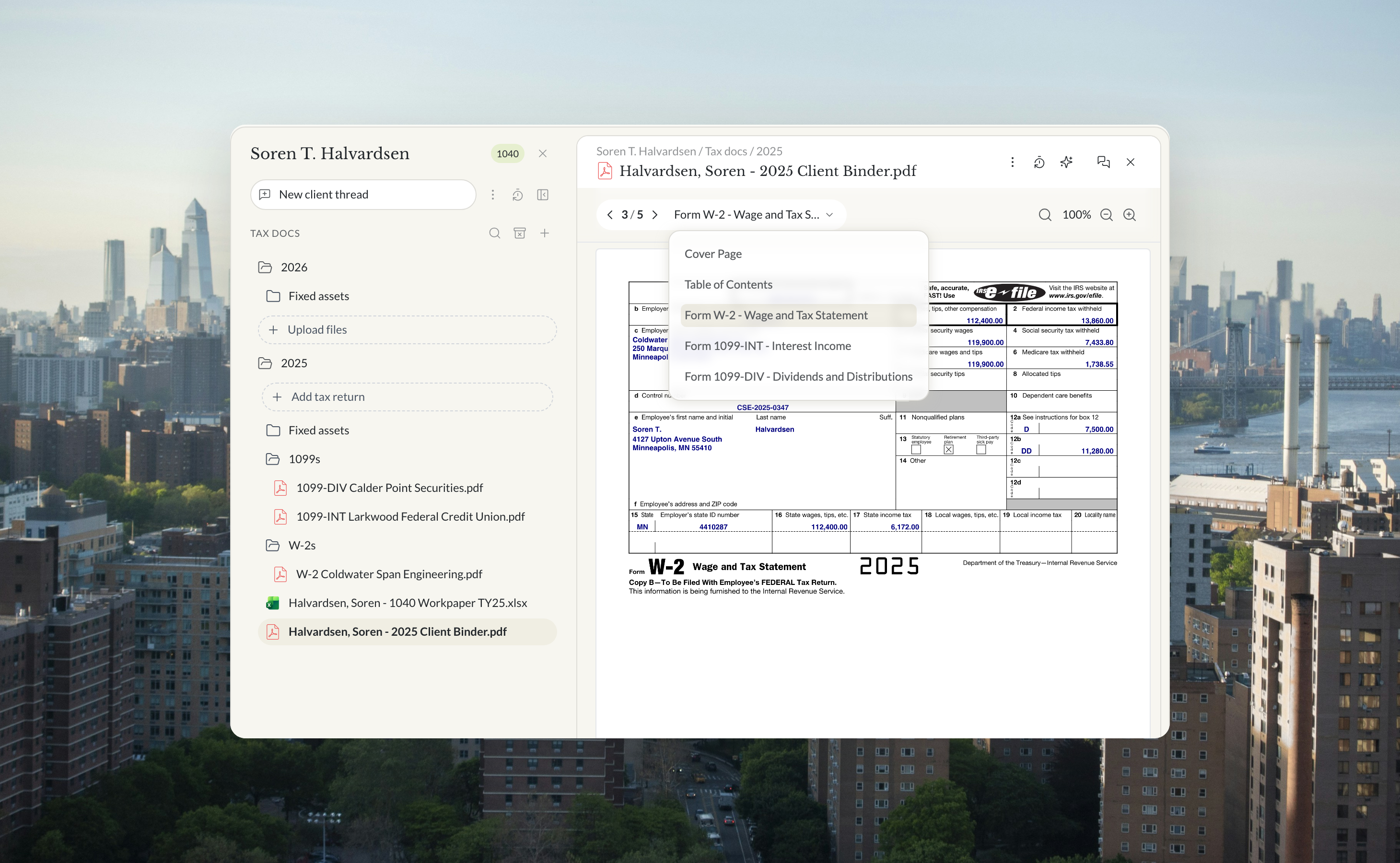
Instead's comprehensive tax platform replaces the cleanup project with a structured file. Capture receipts and itineraries inside tax documents, build the substantiation file in tax workpapers, keep reimbursements moving in tax workflows, update quarterly tax payments when deductions move taxable income, and submit returns through e-file. Model tax savings, produce tax reporting, and pick pricing plans that fit the practice. Join Instead to turn summer travel deductions into documented, reviewable client work.
Frequently asked questions
Q: What makes summer business travel deductible in 2026?
A: The taxpayer must be traveling away from the tax home for a real business purpose, and the costs must be ordinary, necessary, reasonable, and supported by records.
Q: Can a client deduct meals during a business trip?
A: Yes, when the trip qualifies as business travel and the taxpayer needs sleep or rest away from home. Most business travel meals are still subject to the 50% limit.
Q: Are spouse or family travel costs deductible?
A: Usually no. A companion's costs are generally personal unless the person is an employee, has a bona fide business purpose for travel, and the expense is otherwise deductible.
Q: Can clients use the standard meal allowance instead of receipts?
A: Often yes for meals and incidental expenses, but the client still needs records showing the time, place, and business purpose of the travel.
Q: Does a conference at a resort qualify as business travel?
A: It can, if the event directly relates to the taxpayer's trade or business and the business agenda supports the trip. Personal recreation should be separated.
Q: What is the biggest recordkeeping mistake for travel expenses?
A: Waiting until tax season. Clients should save receipts, agendas, calendar entries, attendees, business purpose notes, and allocation details while the trip is fresh.

Year-End Tax Planning 2026: Checklist of Strategies by Dec 31

How AI Tax Orchestration Works in Instead

.png)



.png)