
Remote workers multistate tax filing guide 2026

The rise of remote work has fundamentally transformed how Americans approach their careers, providing unprecedented flexibility and new opportunities. However, this shift also brings complex tax implications that many remote workers overlook until filing season arrives. When you work from home in one state while your employer operates in another, you may incur tax obligations in multiple jurisdictions — potentially affecting your overall take-home pay.
Understanding multistate tax filing requirements is essential for remote workers navigating the 2026 California State Tax Deadlines and other state obligations. The tax landscape for remote workers continues to evolve as states adapt their policies to capture revenue from increasingly mobile workforces, with new guidance emerging throughout 2025 that affects 2026 tax year filing.
This comprehensive guide explores the critical tax considerations for remote workers in 2026, from determining your state residency status to understanding employer withholding obligations and implementing strategic tax planning techniques. Whether you recently transitioned to remote work or have been working remotely for years, proper tax planning can help you avoid costly mistakes and potentially reduce your overall tax burden by thousands of dollars annually.
Remote worker state residency rules explained
Your state residency status serves as the foundation for determining your tax obligations across multiple jurisdictions. States use two primary tests to establish tax residency, and meeting either test can subject you to full taxation on your worldwide income within that state. Understanding these rules is critical because resident states tax all income regardless of where you earn it, while nonresident states tax only income earned within their borders.
The domicile test determines where your primary home is located and where you intend to return when you are away. Factors used to establish domicile include the location where your driver's license and vehicle are registered, your voter registration address, the location of your financial accounts and professional licenses, where your immediate family resides, and where you own or lease your primary residence. A state generally presumes that your domicile does not change until you take affirmative steps to establish a new one, demonstrated by both physical presence and a clear intent to make the new location your permanent home.
Physical presence tests vary by state, but generally establish residency if you spend a certain number of days within the state during the tax year. [2026 New York State Tax Deadlines](https://www.instead.com/state-tax-deadlines/2026-new-york-state-tax-deadlines?utm_source=instead-website&utm_medium=blog&utm_campaign=instead-blogs&utm_content=new york-2026) apply when you maintain a permanent place of abode in New York and spend more than 183 days in the state during the tax year. This statutory residency rule can catch remote workers by surprise if they maintain a home in New York while working elsewhere.
Remote workers must carefully track their physical locations throughout the year to determine which states may claim them as residents. Some states apply statutory residency rules based solely on maintaining a dwelling and spending a significant amount of time there — regardless of where you consider your primary home. This aggressive interpretation can lead to double taxation if two states simultaneously claim you as a resident, making accurate documentation and, if necessary, dispute resolution with state tax authorities essential.
Many states define days spent within their borders using the any-part-of-day rule, meaning that even a brief presence during a calendar day counts as a full day for residency purposes. A remote worker who crosses state lines in the evening after work would count that day toward their presence in both states under many state rules. This harsh interpretation makes precise day counting essential for anyone near statutory residency thresholds.
Consider implementing Tax loss harvesting strategies to offset income across multiple state jurisdictions. Investment losses recognized in your portfolio can reduce your adjusted gross income at both the federal and state levels, providing valuable tax relief when facing obligations in multiple states. This strategy becomes particularly valuable when high-tax states claim residency over you.
Understanding nonresident income tax obligations
Beyond residency status, remote workers may owe taxes to states where they physically perform work, even if they don't live there. Nonresident state taxation focuses on income sourced to activities within that state's borders, creating complex allocation requirements for workers splitting time across multiple locations throughout the tax year.
Most states tax nonresidents on income earned within their borders under sourcing rules. When you perform services while physically present in a state, that state generally has the right to tax the compensation attributable to those work days. This principle applies regardless of where your employer is located, where you receive your paycheck, or whether the work was performed in an office or from a temporary location like a hotel room or a family member's home.
Determining your nonresident tax obligations requires careful day-by-day tracking of where you physically work. A remote worker living in Florida who travels to Georgia for business meetings must allocate a portion of their annual compensation to Georgia based on the days worked there. The calculation typically divides total compensation by total working days, then multiplies the result by the number of days worked in the nonresident state to determine the income subject to that state's tax.
For the 2025 tax year filed in 2026, remote workers should use 260 or 261 working days as the denominator when calculating daily compensation rates, depending on their specific work schedule and whether they worked holidays. This precision matters because even small errors in the allocation formula can lead to under-reporting of nonresident income, triggering penalties and interest if discovered during an audit.
Some states provide de minimis thresholds that excuse small amounts of work performed within their borders from taxation. These convenience thresholds vary significantly, with limits ranging from 0 to 30 days by jurisdiction. Understanding these thresholds helps you avoid triggering filing obligations in states where you perform only occasional work. However, you cannot rely on these thresholds without researching the specific requirements, as many states have no threshold at all.
Statutory employees and independent contractors face additional complexity in nonresident taxation. While W-2 employees benefit from employer withholding systems that help meet nonresident obligations, self-employed individuals must independently track, calculate, and remit taxes to each applicable state through estimated quarterly payments. The Home office deduction becomes particularly valuable for remote workers managing multistate tax obligations, as it can reduce taxable income across all jurisdictions. For more guidance on withholding and estimated payments, refer to IRS Publication 505, Tax Withholding and Estimated Tax.
Employer withholding for remote workers in 2026
Employers must navigate complex withholding requirements when their employees work remotely across multiple states. State tax withholding rules generally require employers to withhold based on where the employee performs services, not where the company maintains its headquarters or payroll operations. This fundamental principle creates administrative challenges for companies with distributed workforces across multiple states.
The default withholding rule requires employers to withhold income tax from employees' pay for the state where the services are performed. A Massachusetts-based company employing a remote worker in Texas should not withhold Massachusetts income tax, as Texas imposes no state income tax. However, this seemingly simple rule becomes complicated when employees work from multiple locations or travel frequently for business purposes.
Reciprocal agreements between states provide relief by allowing residents of one state to work in another without that second state imposing income tax. Currently, reciprocal agreements exist among several state groups, primarily in the Midwest and Mid-Atlantic regions. States with reciprocal agreements include:
- Indiana and Kentucky
- Maryland and Virginia
- Michigan and Illinois
- Minnesota and Michigan
- Montana and North Dakota
- New Jersey and Pennsylvania
- Ohio and Indiana
- Virginia and Kentucky
- West Virginia and Kentucky
- Wisconsin and Illinois
Remote workers should request that their employers withhold based on their resident state when reciprocal agreements apply. For workers in states without reciprocal agreements, ensuring proper withholding requires ongoing communication with payroll departments. Some employers default to withholding for the company's home state, creating underpayment scenarios for employees whose resident states tax the income differently. This mistake often goes unnoticed until filing season, when employees discover they owe substantial additional state tax plus penalties for underpayment.
The convenience-of-the-employer rule creates significant complications for remote workers. Some states, most notably New York, maintain that employees working remotely for the employer's convenience should have their income sourced to the employer's location rather than where the employee actually works. This controversial rule can subject remote workers to taxation in states where they never set foot, particularly when their employers mandate or allow remote work arrangements as a standard practice rather than a business necessity.
For the 2026 tax year, employers should review their state withholding practices to ensure compliance with updated guidance issued throughout 2025. Many states clarified their stance on remote worker withholding following pandemic-era temporary rules, and failing to update withholding systems can expose both employers and employees to penalties.
Convenience of employer doctrine and state rules
State tax codes vary dramatically in how they treat remote workers, creating a patchwork of rules that can seem arbitrary and contradictory. Understanding the specific state provisions relevant to your situation is essential for accurate tax compliance and planning. The convenience-of-employer doctrine is one of the most significant and controversial aspects of state taxation affecting remote workers.
Convenience-of-the-employer rules presume that an employee working remotely does so for their own convenience rather than business necessity, thereby sourcing the income to the employer's location. 2026 Pennsylvania State Tax Deadlines and other state requirements may apply even when you work entirely from home in another state. This principle fundamentally contradicts the traditional rule that income is sourced to where services are performed.
New York's convenience-of-the-employer rule has generated more litigation and controversy than any other state provision affecting remote workers. Under this rule, a remote employee of a New York-based employer who works from home in another state must allocate their income to New York unless the remote work arrangement is required for the employer's business necessity. The burden of proof rests on the taxpayer, and New York interprets "business necessity" very narrowly through a facts-and-circumstances analysis that seldom favors the taxpayer.
Simply allowing remote work or even encouraging it does not satisfy the business necessity exception under New York's interpretation. Instead, the employer must demonstrate that maintaining an office in New York for the employee would be impossible or impractical given the specific nature of the work performed. Examples that might meet this standard include sales territories located far from New York offices or specialized equipment requirements that cannot be accommodated in company facilities.
Several states have challenged these convenience rules, arguing they improperly tax income earned by nonresidents outside their borders in violation of due process principles. The pandemic accelerated these disputes as remote work became the norm rather than the exception. Some states enacted temporary rules to address pandemic-related remote work, while others maintained their existing frameworks regardless of changed circumstances, leading to increased litigation and interstate tax disputes.
States without income taxes offer strategic advantages for remote workers seeking to establish residency. 2026 Florida State Tax Deadlines do not include income tax obligations, making Florida an attractive option for those willing to relocate. However, establishing true domicile requires more than simply renting an apartment; it involves severing ties with your former state and building new connections in your chosen state through multiple documented actions.
Beyond New York, states including Arkansas, Connecticut, Delaware, Massachusetts, Nebraska, and Pennsylvania have adopted or considered convenience-of-employer rules. The specific application varies by state, with some requiring clear employer mandates for remote work while others apply more flexible standards. Remote workers must research the rules in both their resident state and any state where their employer maintains offices.
Multistate income allocation calculation methods
Properly allocating income across multiple states requires systematic tracking and calculation methods that can withstand scrutiny by tax authorities. Remote workers must maintain detailed records of where they physically worked each day to substantiate their income allocation calculations. As state tax authorities increasingly audit multistate workers, accurate record-keeping has become essential rather than optional.
The basic allocation formula divides your total compensation by your total working days, then multiplies it by the days worked in each state. A remote worker earning $100,000 annually who works 260 days per year, spending 200 days in their resident state and 60 days traveling to a nonresident state, would allocate approximately $23,077 to the nonresident state. This calculation assumes equal daily compensation, which may not hold for workers with variable schedules or performance bonuses tied to specific time periods or achievements.
Equity compensation presents particular challenges in multistate allocation. Stock options, restricted stock units, and other equity awards often vest over multi-year periods during which employees may move between states or work in multiple jurisdictions. States use various methods to source equity compensation, including the grant-to-vest and grant-to-exercise methods for stock options. The allocation calculation must consider where you physically worked during the entire period from grant through vesting or exercise, requiring multi-year tracking.
For the 2025 tax year, restricted stock units that vest in 2025 but were granted in earlier years require analysis of where you worked during the entire vesting period. If you worked in multiple states during the grant-to-vest period, you must allocate the income proportionally based on work days in each state throughout that multi-year span. This calculation becomes particularly complex for employees who relocated during the vesting period.
Bonuses and commission income require careful analysis of sources. Some states source these payments based on where services were performed during the measurement period, while others use the location where services were performed when the payment was earned or received. Understanding the specific rules of your resident and nonresident states for these payments prevents costly allocation errors. New York, for example, uses the measurement period approach for bonuses, while some other states use the date-of-payment approach.
Partnership and S corporation income flows through to individual partners and shareholders based on the entity's multistate activities. Remote worker partners or shareholders must track not only their personal locations but also the locations where their entity conducts business operations. The entity typically provides a Schedule K-1 showing income allocated to various states, which individual taxpayers then report on their nonresident returns for each applicable jurisdiction.
Consider utilizing Traditional 401k contributions to reduce your adjusted gross income across all state jurisdictions simultaneously. For 2025, employees can contribute up to $23,500 to their 401k plans, with an additional $7,500 catch-up contribution if age 50 or older. These pre-tax contributions lower your state taxable income in both resident and nonresident states, providing compounding benefits when facing obligations in multiple jurisdictions.
State tax credits prevent double taxation issues
Multiple states taxing the same income create double-taxation scenarios that significantly increase overall tax burdens unless properly addressed. Most states provide credits for taxes paid to other states, but understanding how these credits work and ensuring you claim them properly requires attention to detail and careful calculation on each affected return.
Resident-state credits for taxes paid to nonresident states are the primary mechanism for avoiding double taxation. When your resident state taxes your worldwide income and a nonresident state also taxes income you earned there, your resident state typically allows a credit for the taxes paid to the nonresident state. This credit prevents the same income from being fully taxed by both states, though it doesn't always eliminate double taxation depending on relative tax rates.
Credit limitations can leave you paying more total state tax than you would owe to your resident state alone. Most states limit the credit to the lesser of the tax actually paid to the nonresident state or the amount of tax your resident state would impose on the same income. When the nonresident state has higher tax rates than your resident state, you effectively pay at the higher rate with no additional credit available, resulting in a net tax cost exceeding what you would pay to your home state.
The order of taxation matters for optimizing your multistate tax position and minimizing compliance errors. Generally, you should file nonresident returns first, calculate the taxes owed to those states, and then file your resident return claiming credits for nonresident taxes paid. This sequence ensures you have accurate information about taxes paid when completing your resident return and claiming appropriate credits. Some tax software handles this automatically, while others require manual sequencing.
Some states allow deductions for income taxed by other states rather than providing credits. This approach is less favorable than a direct credit because it only reduces taxable income rather than directly offsetting tax liability. A deduction for out-of-state income taxed elsewhere reduces your taxable income in your resident state, providing relief proportional to your marginal tax rate rather than dollar-for-dollar relief. This distinction can cost taxpayers thousands of dollars when working in high-tax states.
For the 2026 filing, ensure you document all nonresident tax payments carefully, including estimated quarterly payments made during 2025, withholding from your paychecks allocated to nonresident states, and year-end payments with nonresident returns. Your resident state credit calculation requires substantiation of these payments, and missing documentation can result in credit denial during processing or audit. The IRS Publication 17, Your Federal Income Tax provides additional guidance on income reporting across jurisdictions.
Implementing strategic retirement savings through Roth 401k contributions may provide advantages in certain multistate scenarios. While Roth contributions don't reduce current taxable income, qualified withdrawals in retirement are entirely tax-free at both the federal and state levels, providing certainty if you expect to relocate to a high-tax state in retirement or want to eliminate future state tax complications.
Remote worker tax planning strategies for 2026
Proactive tax planning enables remote workers to minimize their multistate tax burden while maintaining full compliance with all applicable state requirements. Strategic decisions about where to live, how to structure compensation, and when to time certain transactions can generate significant long-term tax savings. The key is implementing these strategies before year-end rather than discovering opportunities only after filing season begins.
Establishing domicile in a low-tax or no-tax state provides the most dramatic tax savings opportunity for remote workers with flexibility in where they live. Moving from California to the 2026 Nevada State Tax Deadlines jurisdiction can save tens of thousands of dollars annually for high earners, as Nevada imposes no state income tax. However, successfully changing domicile requires comprehensive steps to sever ties with your former state and establish genuine connections in your new state.
When changing domicile to a no-tax state, document your move thoroughly by taking the following steps:
- Obtain a driver's license within 30 days
- Register all vehicles immediately
- Register to vote in the new state
- Open local bank accounts and move primary financial relationships
- Change your address with employers, financial institutions, and government agencies
- Sell or rent out your former home if possible
- Establish a permanent residence through purchase or long-term lease
- Obtain local professional licenses if applicable
- Join local organizations and establish community ties
- File a declaration of domicile if the new state permits
Documenting your location and work activities throughout the year creates defensible records supporting your tax return positions. Maintain a detailed calendar noting where you physically worked each day, save travel receipts and hotel confirmations with dates and locations clearly shown, track when you crossed state lines for business or personal reasons using date-stamped records, document any temporary work locations required by your employer through written communications, and photograph your actual work location on days when working in different states to create contemporaneous evidence.
These contemporaneous records prove far more persuasive than reconstructed estimates created at tax time. State tax authorities can and do request detailed location documentation during audits, and failure to provide adequate records often results in unfavorable allocations based on assumptions rather than facts. Creating these records in real time through calendar entries, expense reports, and travel documentation requires minimal effort but provides substantial protection.
Negotiating a compensation structure and work-location flexibility with your employer can open valuable tax-planning opportunities. You might request that certain compensation elements be classified as reimbursements for legitimate business expenses rather than additional wages where appropriate. Additionally, discuss establishing a bona fide employer-required remote work arrangement — rather than allowing remote work merely for employee convenience — to mitigate potential "convenience of the employer" issues. It may also be worth exploring whether relocating your tax home to a different state could yield mutual tax benefits for both you and your employer. Finally, consider whether the timing of equity compensation could be adjusted to occur while you are in a lower-tax jurisdiction.
Consider utilizing a Health savings account to reduce taxable income while building tax-free reserves for qualified medical expenses. For 2025, the HSA contribution limits are $4,400 for individuals with self-only coverage and $8,750 for those with family coverage. Individuals age 55 or older can contribute an additional $1,000 as a catch-up contribution. Refer to IRS Publication 969, Health Savings Accounts and Other Tax-Favored Health Plans for full eligibility and contribution guidance.
HSA contributions are deductible above the line, reducing adjusted gross income (AGI) on your federal tax return. This reduction generally carries through to state taxable income in most states that use federal AGI as their starting point, offering both federal and state tax savings.
The Augusta rule offers a unique tax-saving opportunity for homeowners, including remote workers who occasionally travel. Under this rule (IRC §280A(g)), if you rent out your personal residence to your employer or another business for up to 14 days per year, the rental income is entirely tax-free at the federal level and generally not reportable on your state return. This strategy can be especially beneficial for remote workers who maintain a home office and can host legitimate business meetings, allowing them to receive rental income that is excluded from both taxable income and state sourcing calculations.
Optimize multistate compliance with expert guidance
Managing multistate tax obligations as a remote worker requires careful attention to residency rules, income sourcing principles, and state-specific requirements that vary significantly across jurisdictions. The complexity of tracking work location, calculating proper income allocation, and claiming appropriate credits demands systematic record-keeping and strategic planning throughout the year rather than a rushed process at filing time.
Instead's comprehensive tax platform seamlessly integrates multistate tax considerations into your broader tax strategy, ensuring compliance while identifying opportunities to reduce your overall tax burden across all applicable jurisdictions. Instead's intelligent system automatically tracks state-specific filing requirements, calculates proper income allocation across multiple states based on your work location data, identifies available credits for taxes paid to other jurisdictions and optimizes their application, provides comprehensive tax reporting capabilities that support audit defense if needed, and alerts you to planning opportunities before year-end to maximize available tax savings strategies.
Transform your approach to multistate tax filing while minimizing compliance risks and maximizing available tax benefits through strategic planning and expert guidance. Use Instead's tax savings tools to stay ahead year-round, and explore our flexible pricing plans designed to support remote workers navigating complex multistate tax obligations and discover how comprehensive tax planning can save thousands of dollars annually while reducing stress during filing season.
Frequently asked questions
Q: Do I need to file tax returns in every state where I work remotely throughout the year?
A: Not necessarily for every state, though the answer depends on each state's specific filing thresholds and your total income earned there. Many states provide de minimis thresholds that excuse filing obligations when you work only a few days within their borders. These thresholds typically range from zero to 30 days, depending on the jurisdiction. However, you should track your work location carefully and research the specific requirements for each state where you perform services to ensure compliance. States like California and New York have no de minimis threshold, meaning even one day of work triggers filing obligations.
Q: How do reciprocal agreements affect my tax obligations as a remote worker?
A: Reciprocal agreements between states allow residents of one state to work in another state without the work state imposing income tax. If your resident state and work state have a reciprocal agreement, you typically need to submit a form equivalent to a nonresident exemption certificate to your employer, directing withholding to your resident state only. This simplifies your tax situation by eliminating the need to file nonresident returns and claim credits for taxes paid to other states. Currently, reciprocal agreements exist primarily among Midwest and Mid-Atlantic states, and not all states participate in such agreements.
Q: What documentation should I maintain to support my multistate tax return positions?
A: Maintain a detailed calendar showing where you physically worked each day throughout the year, save travel receipts, hotel confirmations, and documentation of state border crossings with dates clearly shown, keep records of your primary residence including mortgage or lease statements and utility bills showing consistent occupancy, document vehicle registration, driver's license, voter registration, and bank account locations in your resident state, preserve communications with your employer regarding remote work requirements and business necessity determinations, and create contemporaneous expense reports or mileage logs that corroborate your location on work days.
Q: Can my employer's location subject me to state tax even if I never work there physically?
A: Yes, in states that apply the convenience-of-employer rule aggressively. These states presume that remote work is for your convenience rather than a business necessity, sourcing your income to the employer's location regardless of where you actually perform services. New York is the most aggressive in applying this rule, though Pennsylvania, Delaware, Connecticut, Arkansas, Massachusetts, and Nebraska have similar provisions in varying forms. Under these rules, you may owe tax to the employer's state even if you never set foot there, provided your employer allows rather than requires your remote work arrangement.
Q: How do I change my domicile to a more tax-favorable state?
A: Changing domicile requires both physical presence in the new state and clear intent to make it your permanent home, demonstrated through multiple objective factors. Take steps including obtaining a driver's license and registering vehicles in the new state within 30 days of arrival, registering to vote in the new state and actually voting there, opening bank accounts and moving financial accounts to institutions with local branches, establishing a permanent residence through purchase or long-term lease that you maintain consistently, filing a declaration of domicile if the new state permits this formal process, changing your address with all employers, financial institutions, and government agencies, selling or renting your former home to demonstrate you don't intend to return, and creating local ties through memberships, professional connections, and community involvement.
Q: Are there strategies to minimize double taxation when multiple states tax the same income?
A: Yes, several strategies can help including maximizing pre-tax retirement contributions through 401k plans, which reduce adjusted gross income across all states simultaneously, utilizing the resident state credit for taxes paid to nonresident states and ensuring you claim all available credits by filing nonresident returns first, timing income recognition when possible to fall in periods when you're in lower-tax jurisdictions or below certain state thresholds, considering relocation to states with reciprocal agreements or no income tax if your situation allows flexibility, implementing tax loss harvesting to generate capital losses that offset ordinary income in high-tax states, and structuring compensation with your employer to maximize reimbursements rather than additional taxable wages when legitimate business expenses exist.
Q: How do the child and dependent tax credits affect my multistate tax situation?
A: The federal Child tax credit of $2,200 per qualifying child for 2025 reduces your federal tax liability directly and doesn't affect your state tax calculations in most jurisdictions. However, many states offer their own child tax credits or dependent exemptions that can reduce state taxable income or provide state tax credits. When filing multistate returns, you may be eligible for child-related benefits in your resident state and potentially in nonresident states where you earned income. However, the specific treatment varies by jurisdiction. Some states base their child credits on your federal credit amount, while others use independent calculations based on state-specific rules and income thresholds.
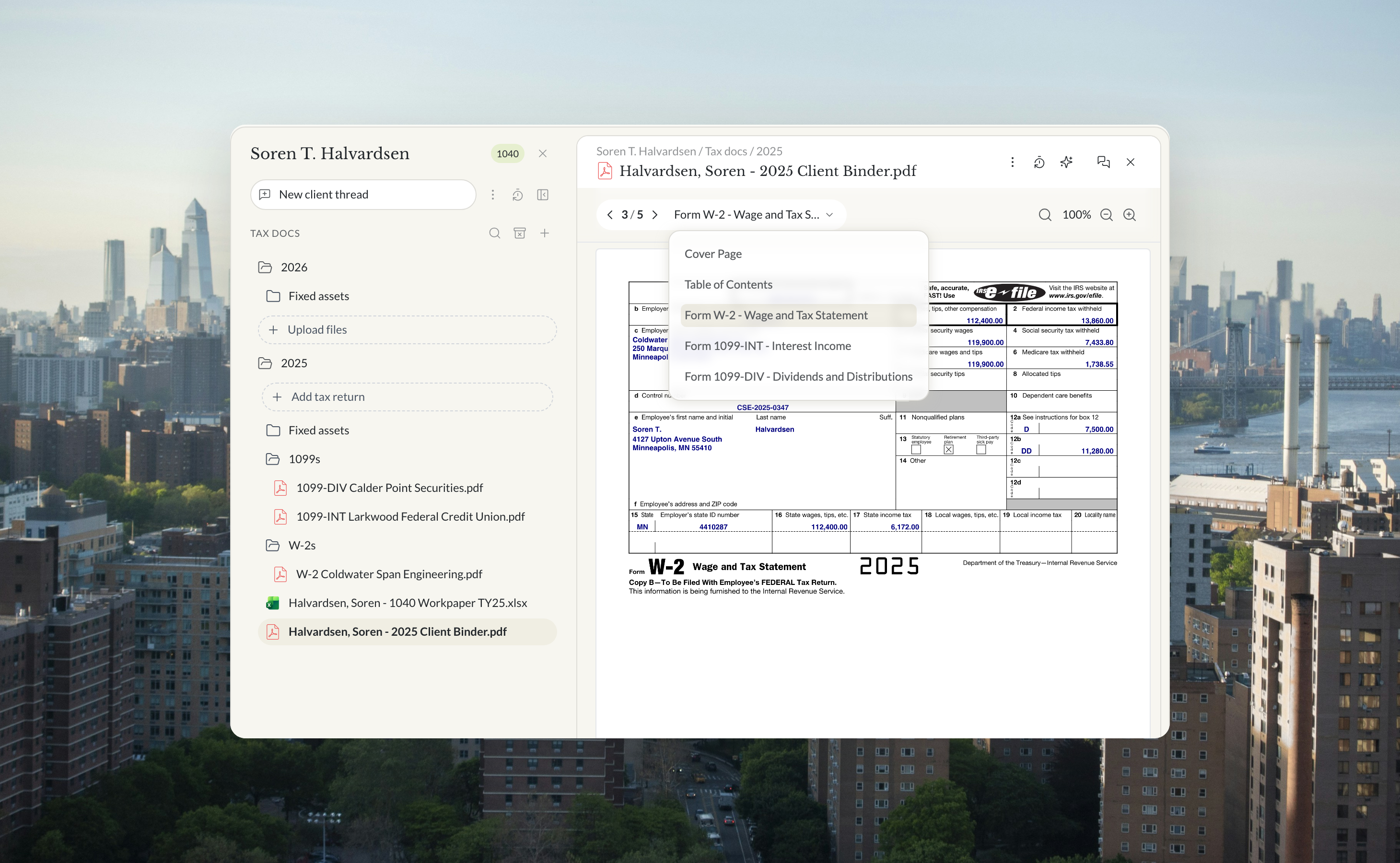

How AI Tax Orchestration Works in Instead

.png)

What to Ask an AI Tax Vendor Before Tax Season



.png)